
3D Bioprinting
3D Bioprinting
3D Bioprinting
3D Bioprinting
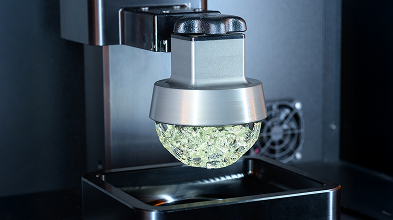
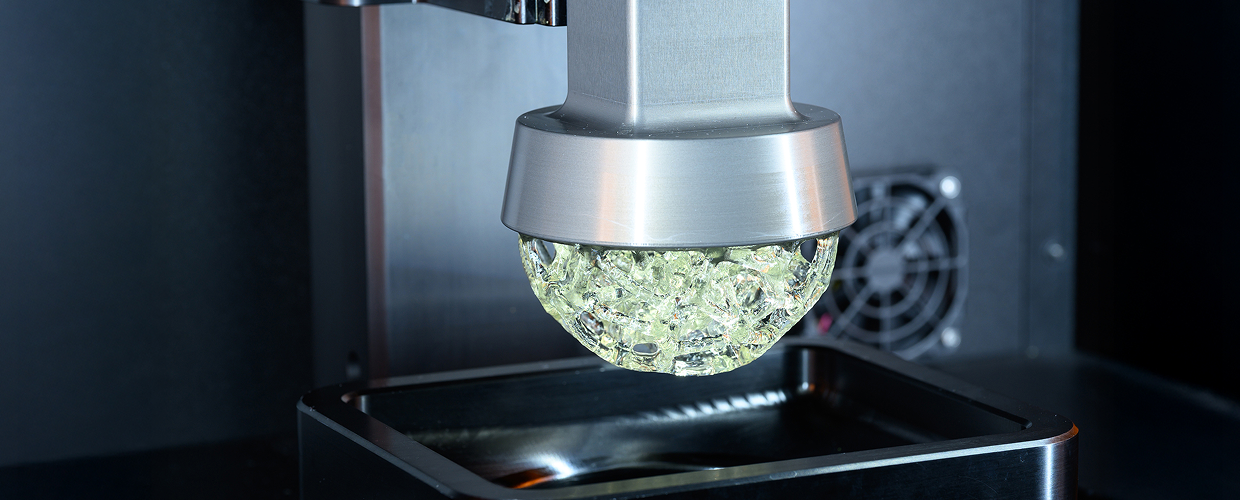
3D bioprinting is an additive manufacturing process that enables the precise spatial patterning combining living cells and biomaterials to fabricate functional, tissue-like constructs.
Using computer-aided design (CAD) models, it structures layer by layer complex architectures. This technology enables the development of models for research, drug screening, and regenerative medicine by replicating the biological and mechanical environment of the human physiology.
3D bioprinting is an additive manufacturing process that enables the precise spatial patterning combining living cells and biomaterials to fabricate functional, tissue-like constructs.
Using computer-aided design (CAD) models, it structures layer by layer complex architectures. This technology enables the development of models for research, drug screening, and regenerative medicine by replicating the biological and mechanical environment of the human physiology.
Multiple technologies can be utilized for 3D bioprinting
All technologies require advanced bioinks that balance biological compatibility with mechanical properties, degradation kinetics and compatibility to the printing process.
Extrusion-Based Printing
Bioinks are continuously deposited through a nozzle to build structures layer by layer. It is widely used for bioprinting due to its compatibility with a range of viscous materials and the ability to print with living cells.
Digital Light bioprinting (DLP)
Photopolymerization technique which uses digital projector to cure full layers of photo-crosslinkable biomaterials offering high resolution and speed.
Inkjet
Printing works by ejecting tiny droplets of ink or bioinks onto a substrate in precise patterns, making it ideal for high-throughput applications and creating fine details.
Two-Photon Polymerization (2PP)
High-resolution 3D printing technique where a focused femtosecond laser induces polymerization only at the focal point, enabling fabrication of complex micro- and nanoscale structures with sub-micron precision.
Laser-Induced Forward Transfer (LIFT)
Direct-writing technique using a pulsed laser to eject bio-ink from a donor substrate sideways onto a receiver, allowing precise cell patterning without nozzle clogging.
Volumetric Printing
A rapid 3D printing technology which projects light patterns into a rotating volume of photopolymer resin, curing the entire object simultaneously.
BioInks for 3D Bioprinting of Tissues and Organs
Bioinks enable fabrication of complex, tissue-like structures that mimic native tissues or organs. An effective bioink must support cell viability, promote proliferation and differentiation, and possess the physical properties required for print fidelity. All technologies require advanced bioinks that balance biological compatibility with mechanical properties, degradation kinetics and compatibility to the printing process.
CollPlant’s rhCollagen-based bioinks possess great potential in bioprinting and tissue engineering.